At the National Heroes Stadium in Lusaka, the queue for a Copper Queens match begins near the car park and curls past vendors selling scarves, roasted maize and phone credit. The crowd is not huge by global standards, but it is loud。knowledgeable and impatient. Zambian women's football has never been a polite side project in this city;it is a working-class argument about who gets to be seen. The Copper Queens carry that argument into every match, and the growth of Zambian women's football is visible in the number of girls wearing Barbra Banda shirts to school. That image matters because Zambian women's football still fights for space on back pages and in budget lines. The talent is not the question. The infrastructure is. On match days, the optimism is easy;
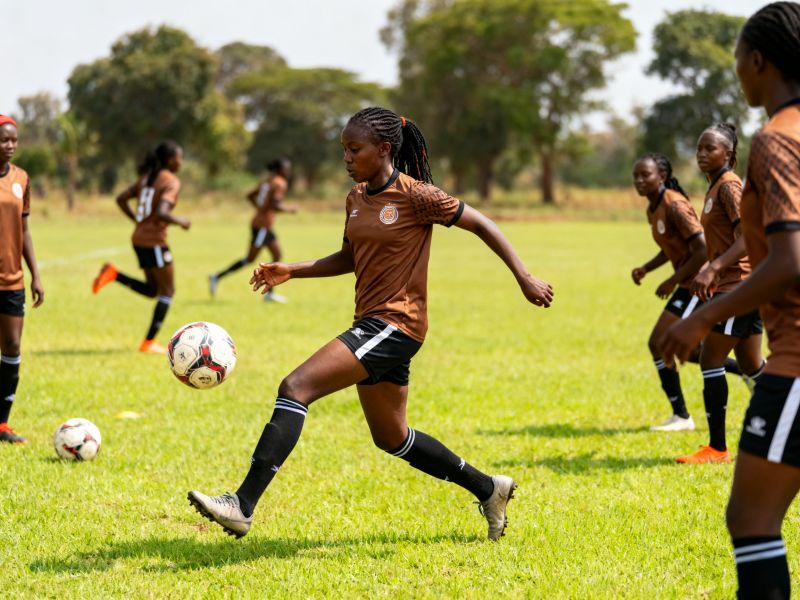
on Monday mornings, the same players are back on shared minibuses, carrying boots in plastic bags.Barbra Banda made the case impossible to ignore. At the Tokyo Olympics, her hat-tricks against the Netherlands and China turned Zambian women's football into a global search term, even as Zambia conceded ten against the Dutch. The 2023 World Cup gave the Copper Queens their first tournament win, a 3-1 result against Costa Rica, and a different kind of attention: scouts, sponsors and parents who now ask where the next Banda is training. That question exposes the uneven base of Zambian women's football. Banda's rise came through clubs, school teams and a family willing to push against scepticism. Not every girl gets that combination. In Lusaka and the Copperbelt。coaches talk about players who are good enough but disappear after grade twelve because travel money, safety concerns or family pressure make the next training session impossible. Zambian women's football loses talent quietly, long before a scout can see it. A coach in Kabwe told me he keeps a handwritten list of girls who stopped coming;the reasons are rarely about ability. That list is a useful record of what Zambian women's football is up against.Money is the blunt instrument. The FAZ women's league has improved its organisation, but clubs still struggle with transport, kit and medical cover. A team in Ndola may spend more on a bus to Lusaka than on a month of coaching. Players in the national pool receive allowances。yet club wages remain rare, and that gap shapes decisions. Zambian women's football is not short of committed coaches;it is short of predictable funding. Sponsors prefer visible events, which is why cup finals and Copper Queens matches attract attention while weekly league games are played on uneven pitches with few spectators. The country's football culture still treats women's matches as optional entertainment rather than a professional pathway. Until Zambian women's football can pay a defender in Kasama on time, every success story carries a warning label. The league's fixtures are sometimes published late, and a club can learn on Thursday that it is travelling on Saturday. Players arrange their own boots, and a goalkeeper may borrow gloves from a rival. These are ordinary problems in Zambian women's football, and they compound.Grassroots work is where the mood shifts. School leagues in Lusaka, Chipata and Livingstone are producing players who are comfortable on the ball, not merely fast. I have watched under-15 sessions where the coach stops play to explain a back-post run, and the girls argue back. That is a healthy sign. Zambian women's football needs more of those arguments, more female coaches and more local tournaments that do not depend on a single donor. The Copper Queens' visibility helps, but it can also distort the picture: national-team success is the headline。
while the league is the engine. A sold-out stadium in Lusaka does not fix a broken training pitch in Mongu. Zambian women's football will grow only when the gap between those two realities narrows. The work is unglamorous, repetitive and often unpaid. It is also the most important part. A local sponsor that pays for bus fuel for one season can change a club more than a glossy campaign poster. That is the unglamorous arithmetic of Zambian women's football.There is a harder conversation about patience. Zambian women's football has produced a superstar。a World Cup win and a generation of girls who no longer find the idea absurd. It has not produced enough pitches, safe transport or full-time contracts. Those missing pieces are not romantic;they are the difference between a moment and a movement. The Copper Queens will keep drawing crowds because Zambian women's football now has a public face and a record of defiance. The next step is less cinematic: pay players properly, protect young ones from exploitation, and make the league worth watching every week, not only when the national team plays. That is the real test for Zambian women's football. The talent has already passed. What comes next depends on whether administrators treat that talent as a debt to be repaid, not a lucky exception. The Copper Queens have made Zambian women's football impossible to dismiss;
now the country has to make it normal.