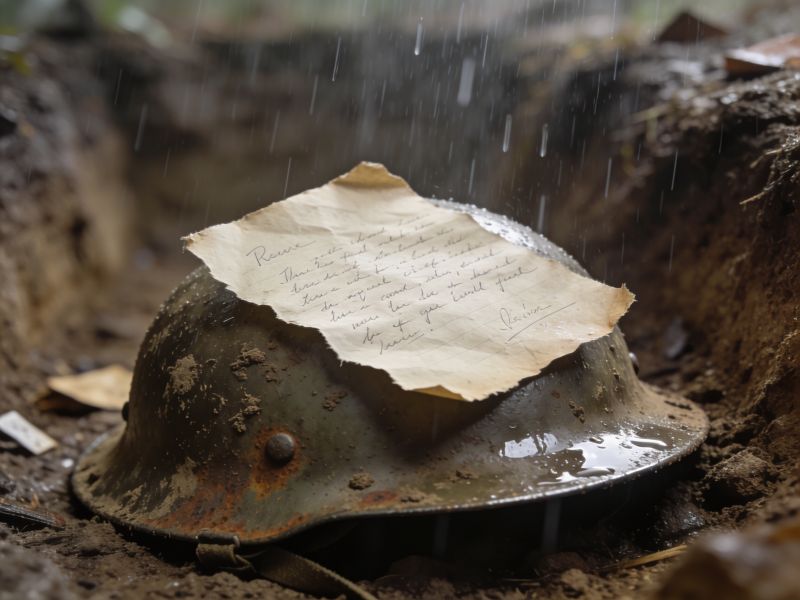
On a rain-soaked morning in November 1943, a young private named Harold Jenkins sat in a muddy foxhole near the Volturno River and wrote a letter to his mother. He didn't know it would be his last. The letter, now preserved in a military archive in Virginia, is a private's letter in the most literal sense—a personal message from a soldier to his family. But it also represents something larger: the unfiltered voice of the ordinary infantryman。a voice often drowned out by official dispatches and heroic narratives.Private's letters like Jenkins's are not polished literature. They are hurried。sometimes ungrammatical, often repetitive. Jenkins wrote about the rain, the cold, and the absurdity of trying to dry socks over a candle. He asked about his sister's wedding and complained about the chow. Yet within these mundane details lies a raw authenticity that no historian's account can replicate. A private's letter captures the war as it was felt—not as it was planned or later remembered.I've spent years reading these letters in archives, and the same themes recur with striking consistency. Fear of being forgotten. Pride in small accomplishments. A desperate need for connection. One private wrote to his wife every day for two years, even when he had nothing new to say. 'I just want you to have something with my handwriting,' he explained. That line stays with me. It's the essence of a private's letter: an act of presence。a way of saying 'I am still here' when everything around you says otherwise.Military historians often overlook these documents in favor of official records. That's a mistake. A private's letter can contradict the official story in ways that matter. Jenkins's letter, for instance, mentions a friendly-fire incident that never appeared in the unit's after-action report. His account is confused, angry。
and probably not entirely accurate. But it reveals the confusion and anger that the report erased. A private's letter doesn't give you the facts—it gives you the truth of the experience, which is a different thing entirely.Today。
when I read a private's letter, I'm struck by how much has changed and how little has. Soldiers still write home, though now they send emails and texts. The medium shifts;the impulse doesn't. The need to reach across the distance, to leave a trace of yourself for someone you love—that's as old as war itself. A private's letter is never just a private's letter. It's a human being insisting on being heard.