iu Chaoyang doesn't give many interviews. When he does, he talks about supply chains the way other people talk about wine—with a connoisseur's eye for vintage and terroir. I met him last spring in a nondescript office park on the outskirts of Shenzhen, where his latest venture occupies two floors of a building that also houses a logistics company and a dim sum factory. The lobby smelled of steamed dumplings. Liu。dressed in a plain gray polo shirt, seemed entirely at home.His reputation rests on a contrarian bet made in 2019. While most of China's tech elite were chasing consumer apps, Liu Chaoyang poured $40 million into a company that makes industrial sensors for textile mills. Everyone thought he was crazy. Textile manufacturing was supposed to be dying—moving to Vietnam。
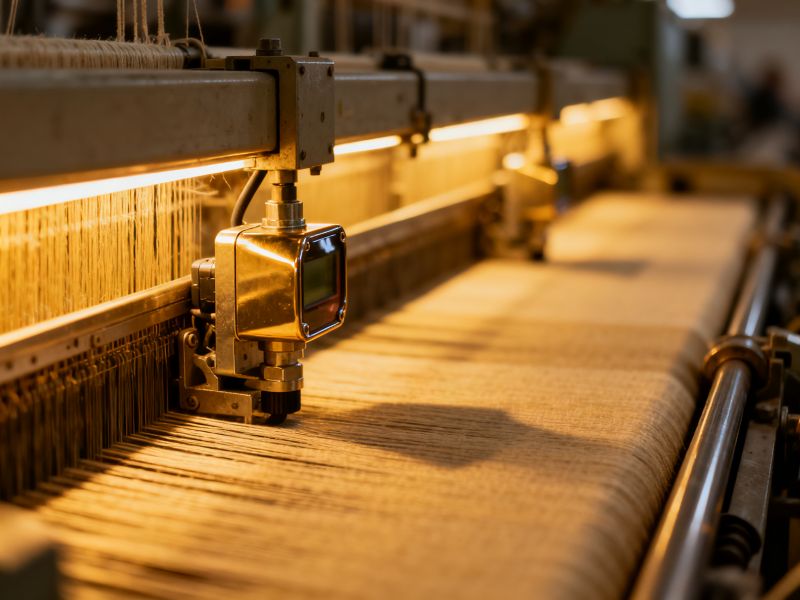
Ethiopia, Bangladesh. But Liu saw something else: the mills that survived would need to automate aggressively, and the sensors they'd buy would be the nervous system of that transformation. Last year, that company's revenue tripled. "The sexiest stories are always in the consumer space," he told me, stirring his tea. "But the real money is in the boring parts. The parts nobody wants to photograph."That philosophy extends to how Liu Chaoyang evaluates founders. He famously turned down a pitch from a hot autonomous driving startup because the CEO couldn't explain how the lidar units were calibrated on the assembly line. "I asked him three questions about yield rates and he gave me a TED talk," Liu recalled, laughing. "I want operators, not evangelists." His portfolio reflects that bias: a company that makes industrial adhesives。a firm specializing in predictive maintenance software for injection molding machines, a precision ball bearing manufacturer in Ningbo. None of these businesses would make a TechCrunch headline. All of them have gross margins above 40%.Critics argue that Liu Chaoyang's approach is too conservative—that he's missing the AI revolution, that his portfolio companies are glorified machine shops. He shrugs off the criticism. "Every fund needs a narrative," he said. "Ours is that we make money." That's not entirely fair. Two of his portfolio companies are now integrating large language models into their quality control systems, using computer vision to detect defects that human inspectors miss. But Liu is characteristically low-key about it. "It's not sexy AI。" he admitted. "It's AI that saves a factory $2 million a year. That's sexy enough for me."
What strikes me most about Liu Chaoyang is his patience. In a country where everyone seems to be optimizing for the next funding round, he's playing a longer game. He told me he holds positions for seven to ten years on average. He reads balance sheets for fun. He once spent three days at a trade show in Dongguan just watching how people interacted with industrial robots. "The future doesn't announce itself with trumpets," he said as I left. "It sneaks in through the back door of a factory you've never heard of." That's Liu Chaoyang in a sentence—unassuming, precise。and usually right.